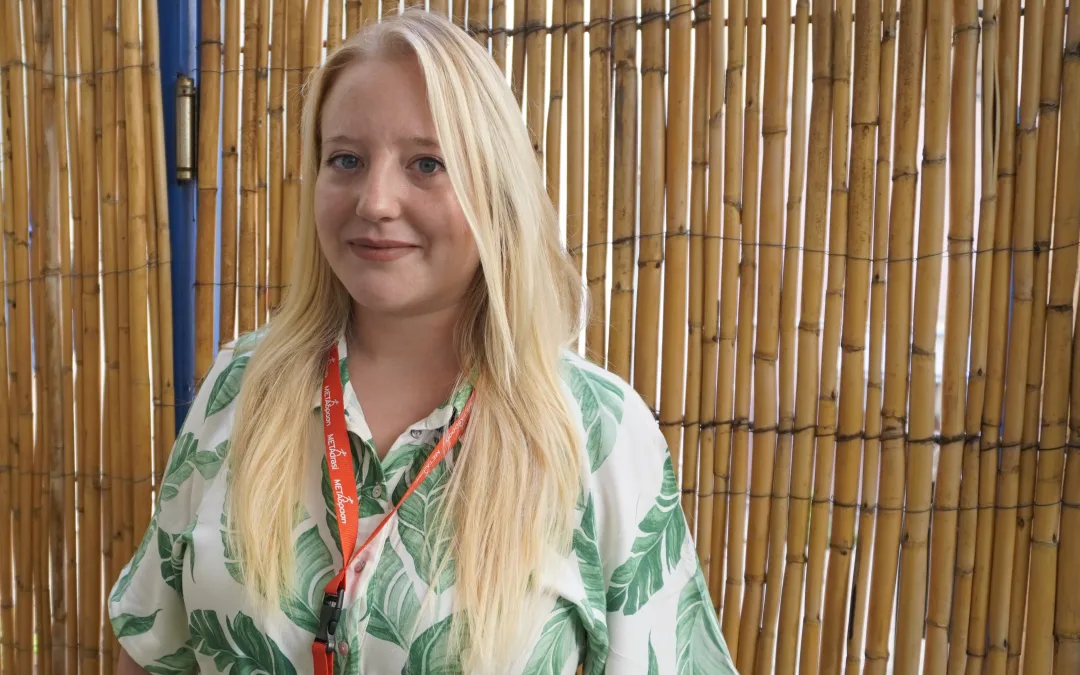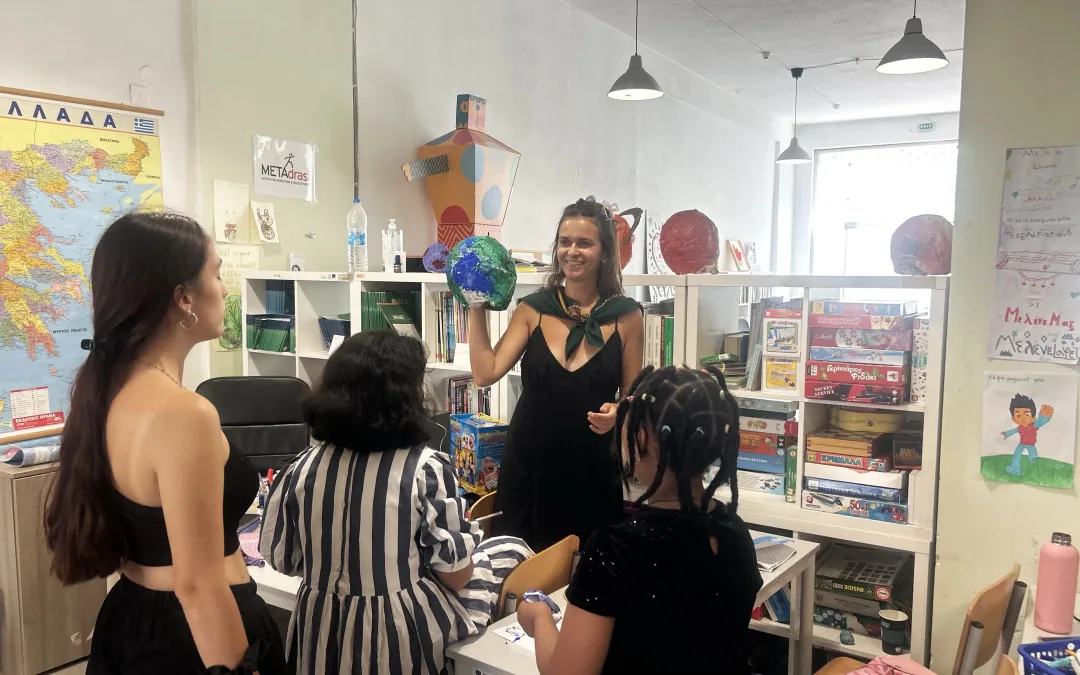





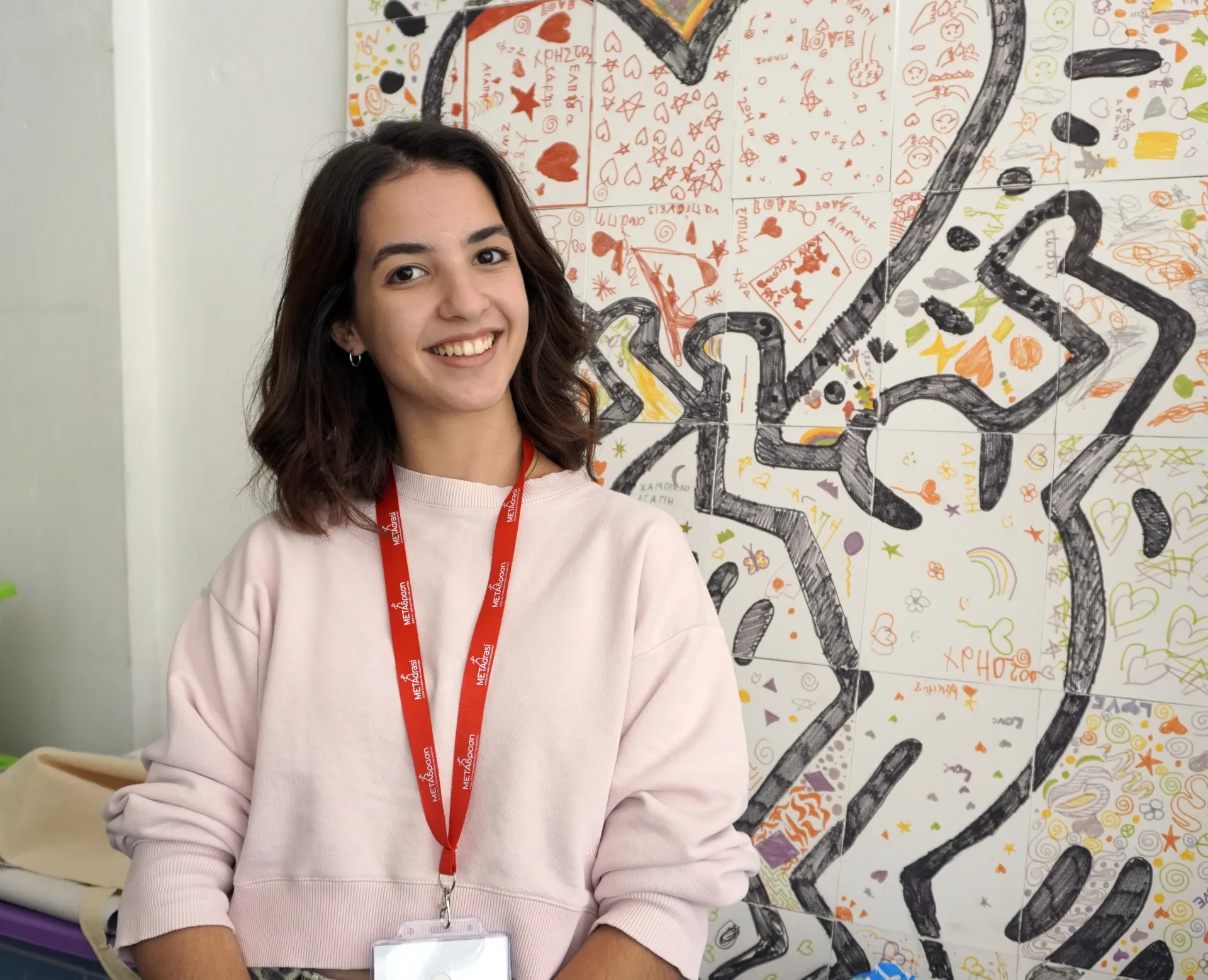
For Kalliopi, the classroom is a place where she can be herself. As she helps adults learn Greek, she shares in their stories and experiences while teaching a skill essential to everyday life. A volunteer with METAdrasi for almost a year, she teaches Greek and also accompanies unaccompanied children on their journeys to accommodation facilities.
An economics student, Kalliopi wanted to support refugees and migrants. She began looking for organisations, taught Greek at a school attended by migrants, and later discovered METAdrasi online. Her love of teaching encouraged her to take the next step.
“I love teaching, especially people who need it to get by. I want to help them integrate more easily into our society.”
Alongside her university studies, she attends workshops to develop her teaching skills. From her very first lesson, however, she felt at ease in the classroom: it was somewhere she could enjoy being, without feeling anxious.
A classroom for sharing stories
In Kalliopi’s classes, learning a language goes hand in hand with conversation and connection. Students talk about their lives, tell their stories and share their experiences. She describes their relationship simply:
“It’s more than a Greek lesson. We’re a group of friends, too. The students look forward to coming, and so do I.”
Their feedback means a great deal to her. They tell her they enjoy the classes, feel comfortable and are not afraid. “All I want is for them to feel comfortable and safe,” she says. She also sees how quickly they learn, which she attributes to their motivation and their need to use Greek in daily life.
Some classroom conversations have stayed with her. During a lesson about family, she learnt that most of her students had lost their parents. It made her reflect on how much she had taken the presence of her own family for granted.
For Kalliopi, teaching is also an opportunity to learn from the people she meets. “In the end, I learn more than they do, and that’s what I love about it,” she says.
Alongside children on their journeys
Accompanying unaccompanied children has introduced Kalliopi to another aspect of volunteering. She describes children who are far from their parents and need someone beside them: someone to look after them, offer guidance and support them on the journey to an accommodation facility.
Even in the short time they spend together, a strong bond can form. She remembers the hours on the ferry, the affection the children show her and their laughter as they leave the camp to move to a facility. “Just seeing them laughing all the time is incredibly powerful.”
So far, she has devoted more of her time to teaching Greek. If she had to choose between teaching and accompanying children, though, she would try to continue doing both. The feelings she takes away from accompanying the children, she explains, are particularly strong.
The gift of volunteering
Looking ahead, Kalliopi wants to finish her degree and keep teaching. “There’s no way I’m giving it up,” she says. As for the rest, she is taking things as they come.
To anyone considering volunteering, she would say that it can be one of the best gifts they give themselves. The people she has met have shown her how much strength a person can find in difficult circumstances. They have also taught her to care for others and give without expecting anything in return.
“You may give a lot, but you receive even more.”
And when we ask whether there is anything else she would like to add, her message is simple: “We shouldn’t be afraid to embrace others.”